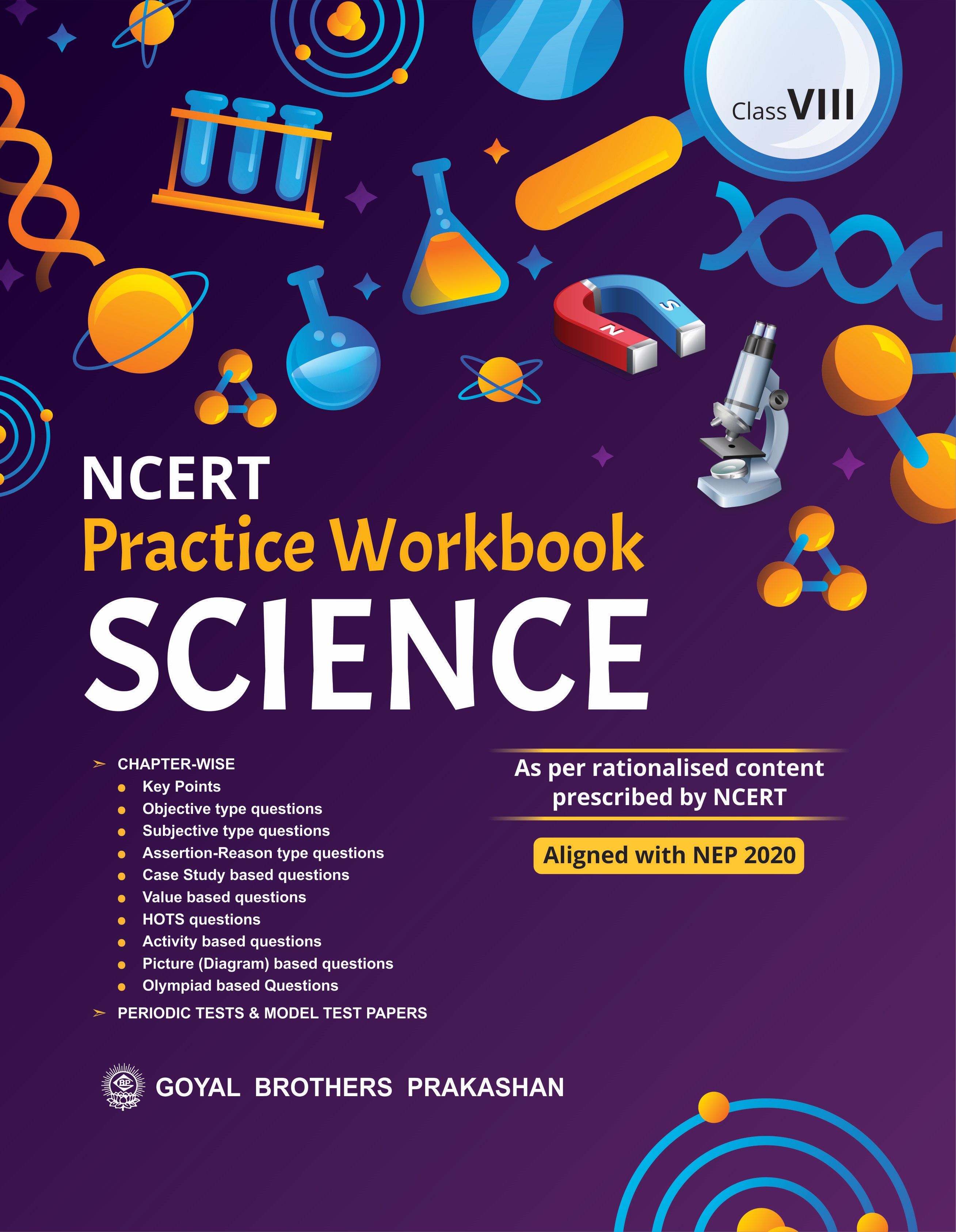
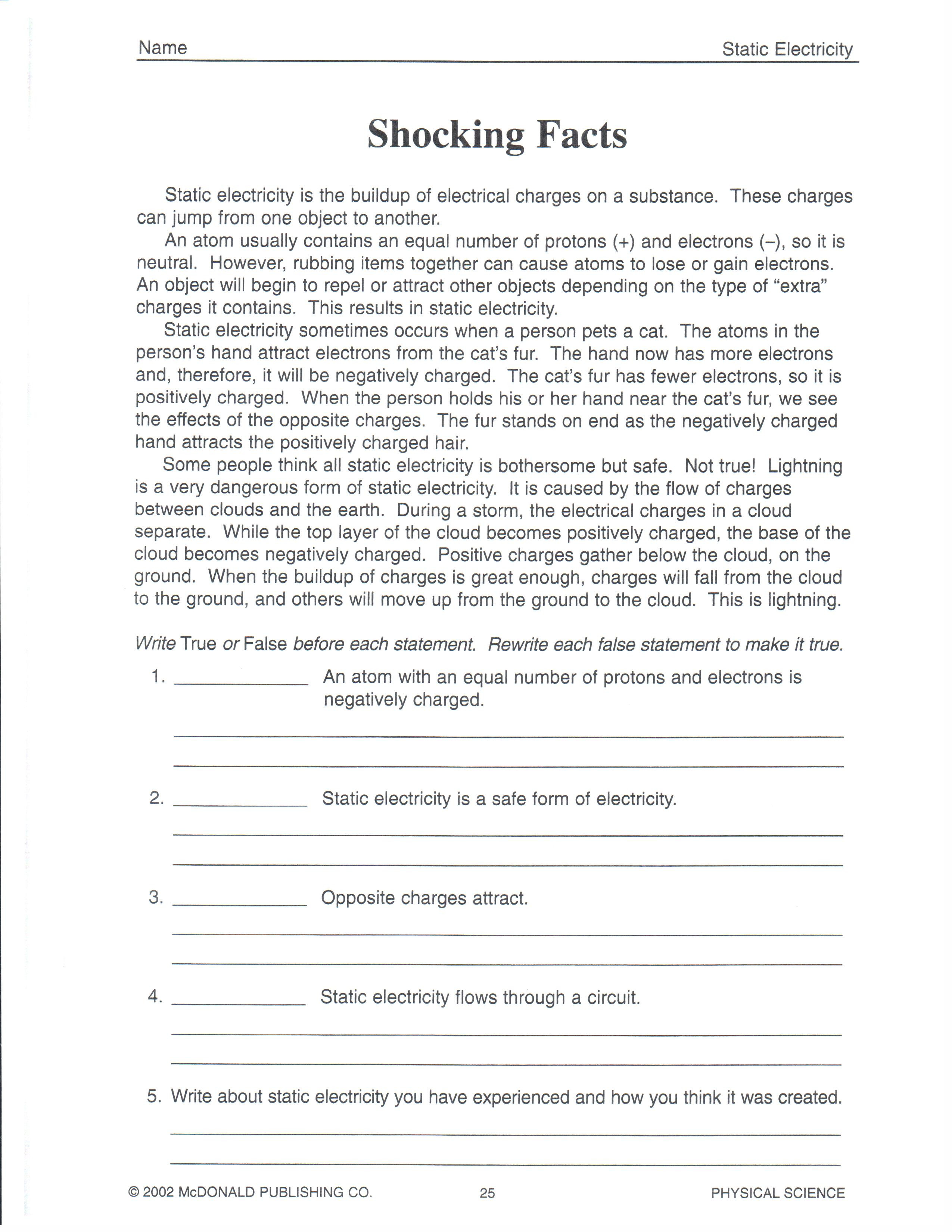
Let's be real for a second: most science worksheets class 8 materials out there are either mind-numbingly boring or so complicated they make you want to toss the textbook out the window. Why is it that the year you're finally old enough to ask real questions about how the world works—like why your phone battery dies faster in winter or how that weird green slime grows in the pond—the worksheets feel like they were written by a robot for a robot? That's the exact frustration I'm here to fix.
 Download
Here's the thing: your brain in 8th grade isn't the same as it was last year. You're not just memorizing facts anymore—you're connecting dots. And the right worksheets? They should feel less like homework and more like a detective case you actually want to solve. But most of them fail at that. They treat science like a list of dead people and boring definitions. That's a crime, honestly, because this is the year you can start seeing the chemistry in your kitchen and the physics in your bike ride. I have a mild opinion about this: if the worksheet doesn't make you say "huh, that's cool," it's not doing its job. Look—I've seen the garbage they pass off as study material, and it makes me want to rewrite every single page myself.
 Download
What you're about to read isn't just another collection of questions to fill in blanks. It's a shortcut to the good stuff—the concepts that actually click, the experiments you can try without a lab coat, and the kind of practice that makes you feel like a scientist, not a parrot. Keep reading, and you'll find the exact tools to turn that textbook dread into something you might even look forward to. No fluff. Just the real deal.
 Download
Let's be honest for a second: most eighth-grade science materials are about as exciting as watching paint dry. They hand you a dense textbook, ask you to memorize the periodic table like it's a shopping list, and call it a day. But here's what nobody tells you—the real magic happens when you stop passively reading and start actively wrestling with the material. That's where a well-designed set of exercises comes into play, not as busywork, but as a thinking tool. The best resources for this age group force you to predict an outcome, test it, and then explain why your prediction was wrong. That's where actual learning lives.
 Download
The Part of science worksheets class 8 Most People Get Wrong
Most parents and even some teachers treat these tools as glorified answer sheets. They hand them out, check for completion, and move on. This is a massive missed opportunity. The real value of a solid exercise set isn't in the correct answer—it's in the path of reasoning the student takes to get there. A great eighth-grade physics sheet, for example, shouldn't just ask "What is Newton's Third Law?" It should present a scenario: a skateboarder pushes off a wall. The student must diagram the forces, calculate the resulting acceleration, and then write a one-sentence explanation of why the wall doesn't move. That's not memorization. That's applied physics. When you approach these materials with the goal of understanding the "why" behind the "what," you stop treating them like homework and start treating them like a lab notebook.
 Download
I've seen students completely shift their attitude toward science when they encounter a sheet that asks them to design a simple experiment to test friction on different surfaces, rather than just listing the definitions. It turns a passive task into an active investigation. Here's the actionable tip: when you or your student finishes a page, spend two minutes verbally explaining the main concept out loud without looking at the paper. If you can't explain it clearly, you haven't learned it yet. That feedback loop is worth more than a dozen completed worksheets.
 Download
Why "Answer Hunting" Kills Real Understanding
There is a dangerous habit that creeps in around the middle school years: scanning the text for the exact sentence that matches the question. It's efficient for getting a grade, but it's toxic for building knowledge. A quality set of activities for this grade level deliberately breaks that pattern. The best ones include an open-ended question where there is no single right answer—like asking students to propose a method for reducing friction in a bicycle chain. The response reveals whether they truly grasp the concept of friction as a force, or if they're just parroting the word "lubricant." This is the difference between surface-level compliance and deep cognitive engagement.
 Download
The Specific Skills That Actually Stick at This Age
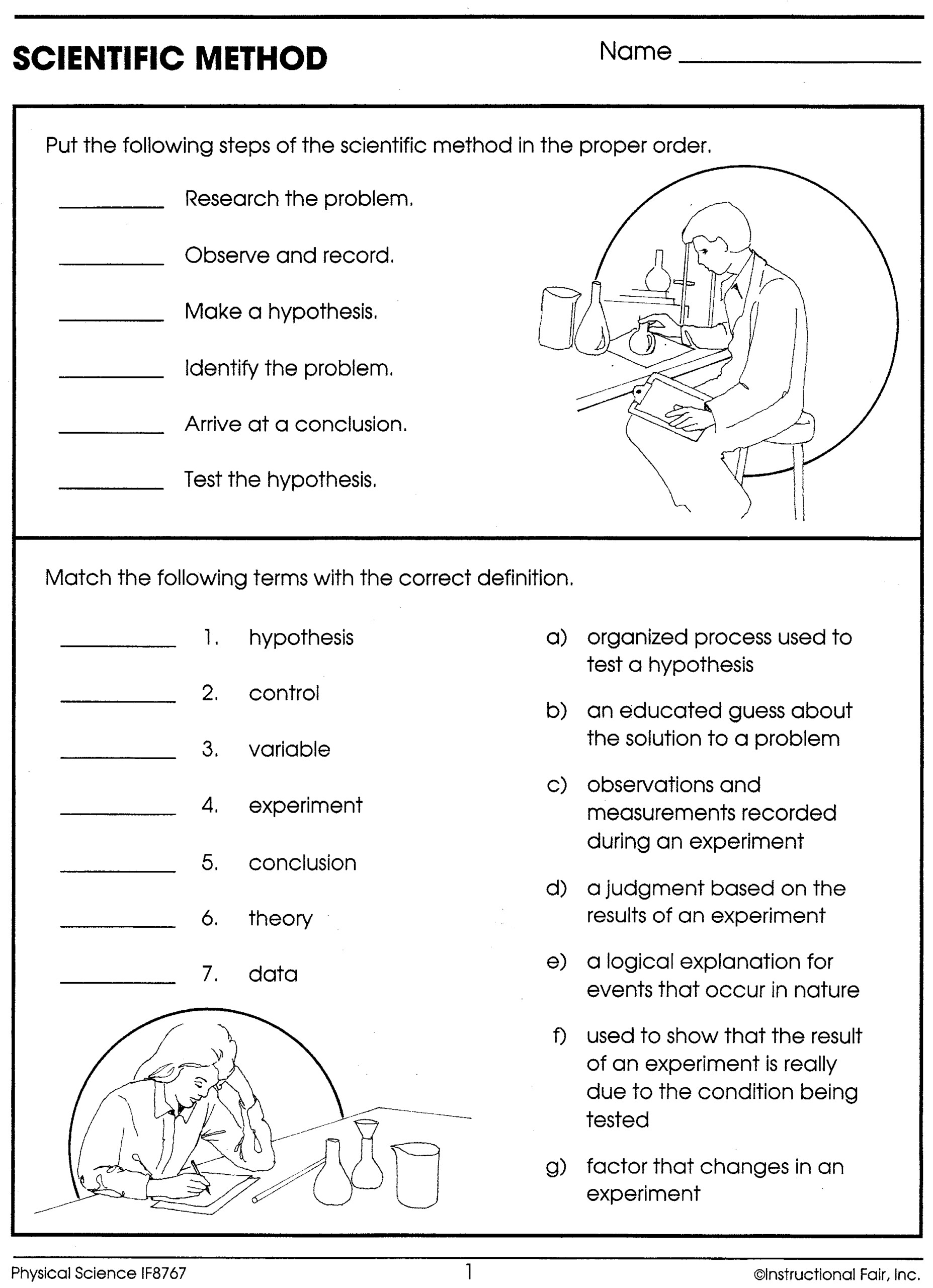
Eighth grade is a weird pivot point. Students are old enough to handle abstract concepts like chemical reactions and genetic inheritance, but they still need concrete, hands-on anchors to make those ideas real. This is where a structured practice sheet shines, provided it targets the right cognitive skills. The most effective ones don't just test recall; they test the ability to compare, contrast, and predict. A good genetics exercise, for instance, won't just ask for definitions of dominant and recessive traits. It will give you a Punnett square with two parent genotypes and ask you to predict the probability of a specific phenotype in the offspring. Then—and this is the kicker—it asks you to justify your prediction in a sentence. That sentence is where the learning solidifies.
 Download
To illustrate what a balanced set of skills looks like, here is a realistic breakdown of what a single, well-constructed practice session for this grade level should cover:
 Download
| Skill Focus | Example Task | Why It Matters |
|---|---|---|
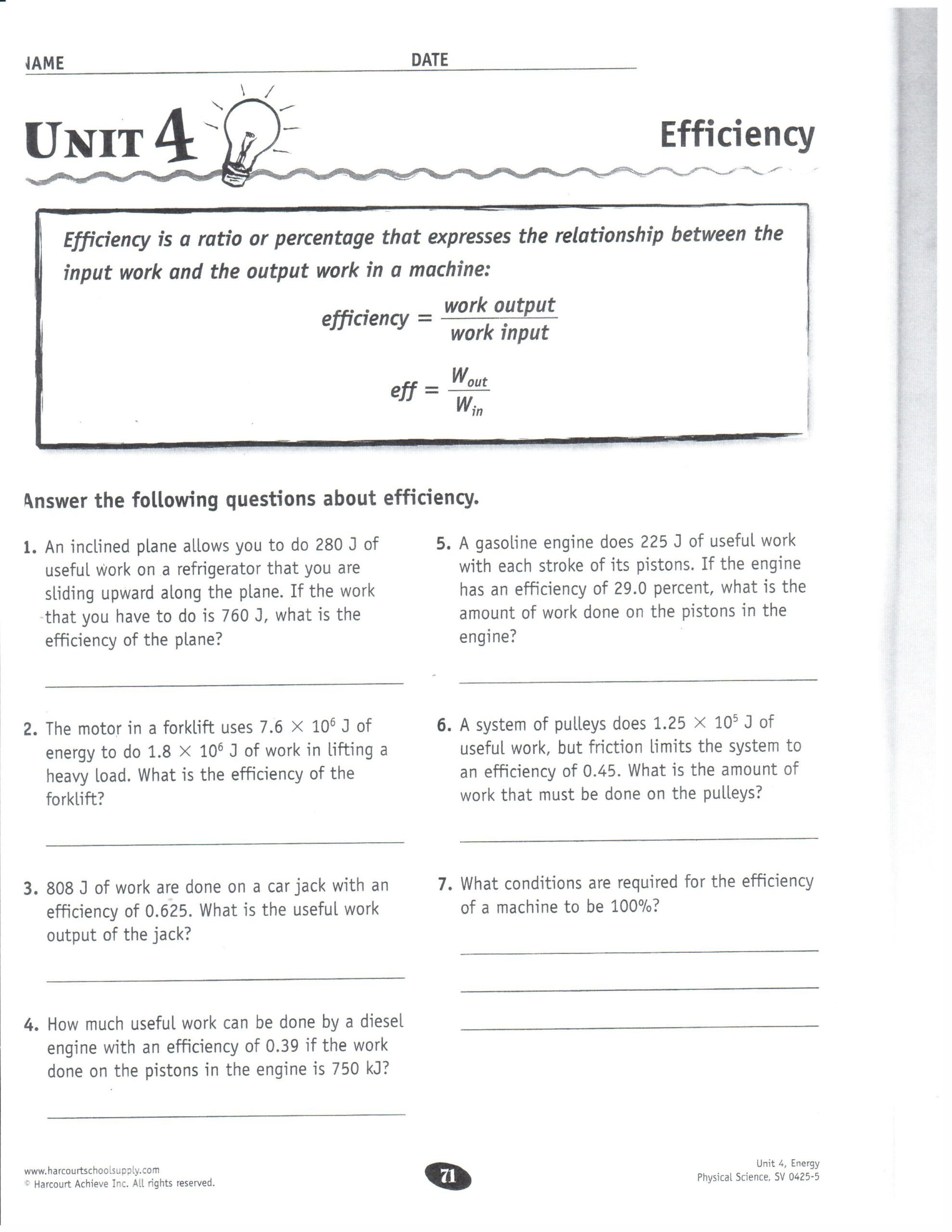
| Data Interpretation | Read a graph of temperature vs. time for a cooling liquid; identify the plateau phase. | Teaches students to extract meaning from visual data, not just text. |
| Hypothesis Formation | "If we increase the surface area of a solute, then the dissolution rate will ___ because ___." | Forces a prediction based on prior knowledge, which strengthens neural connections. |
| Error Analysis | Given a flawed experiment setup (e.g., measuring plant growth with inconsistent light), list two sources of error. | Builds critical thinking and prepares them for real lab work in high school. |
| Concept Mapping | Draw a simple flow chart connecting photosynthesis, glucose, and cellular respiration. | Reveals whether the student sees the system, not just isolated facts. |
Notice what's missing from that table? Rote memorization. No "list the three types of rock." No "define photosynthesis." Those have their place, but they should be the warm-up, not the main event. The heavy lifting comes from tasks that force the brain to manipulate information, not just store it. When a student wrestles with why a graph shows a sudden drop in temperature, or why an experiment's results don't match the hypothesis, they are doing the work of a real scientist. And that's infinitely more valuable than filling in a blank.
 Download
Why One Page Can Beat an Entire Chapter
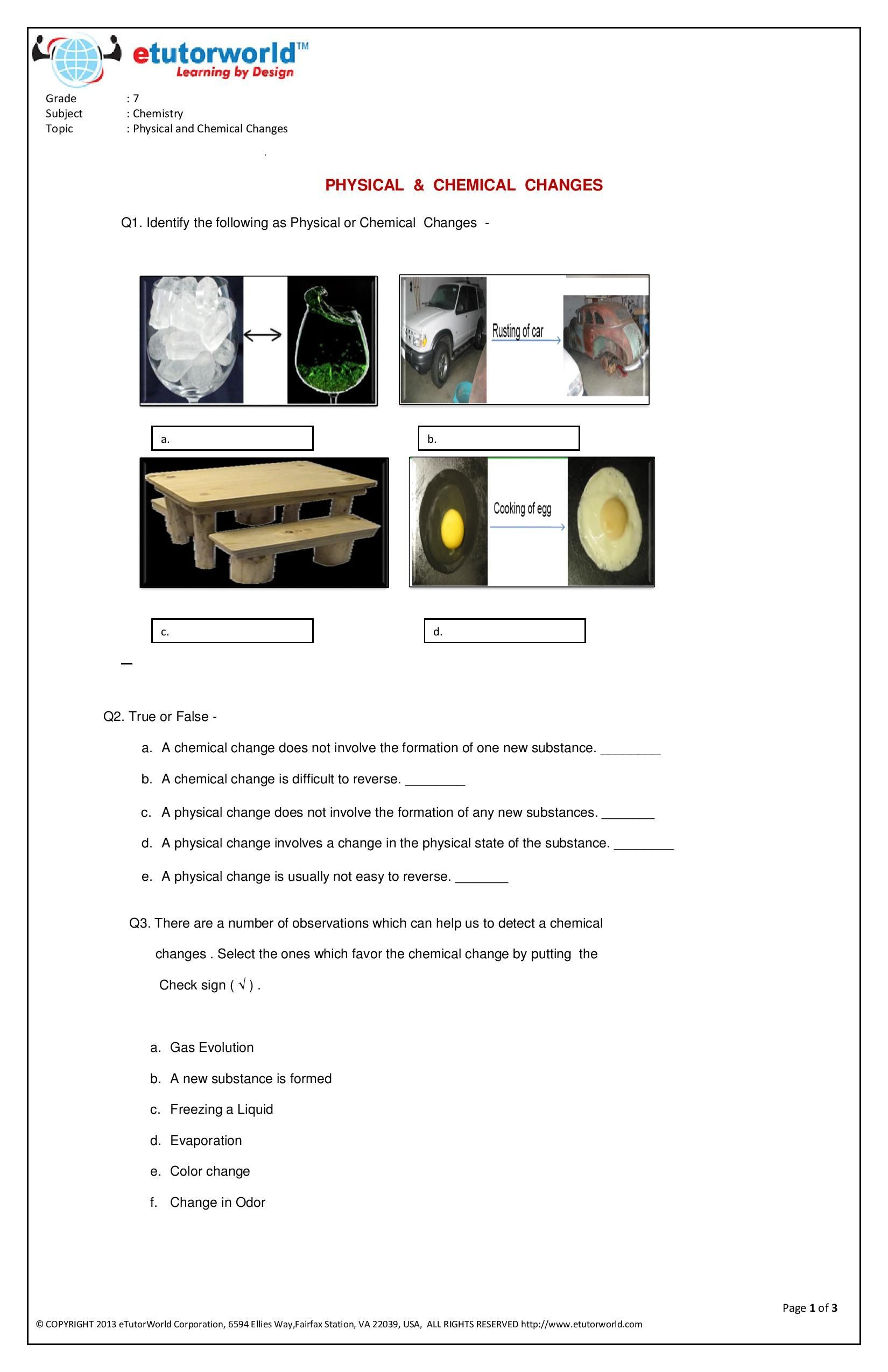
I've watched a single, well-crafted page on chemical and physical changes create more "aha" moments than an entire textbook chapter. The reason is simple: a good page forces a choice. It presents a list of everyday scenarios—melting ice, rusting nail, dissolving sugar, burning wood—and asks the student to classify each one and justify the classification with a specific property. That act of justifying is what locks the concept into long-term memory. A textbook just tells you the definition. A great exercise makes you defend your decision. That's a world of difference.
 Download
One Last Thing Before You Go
Every experiment your child runs, every diagram they label, and every question they wrestle with is building something far bigger than a test score. It’s wiring their brain to ask why the world works the way it does—a skill that will outlast any textbook. The eighth-grade science curriculum is a turning point; it’s where abstract ideas like chemical reactions and force laws start clicking into real-world understanding. By giving your student the right tools now, you’re not just helping them pass a unit—you’re showing them that learning is a conversation, not a chore. That shift in mindset changes everything.
 Download
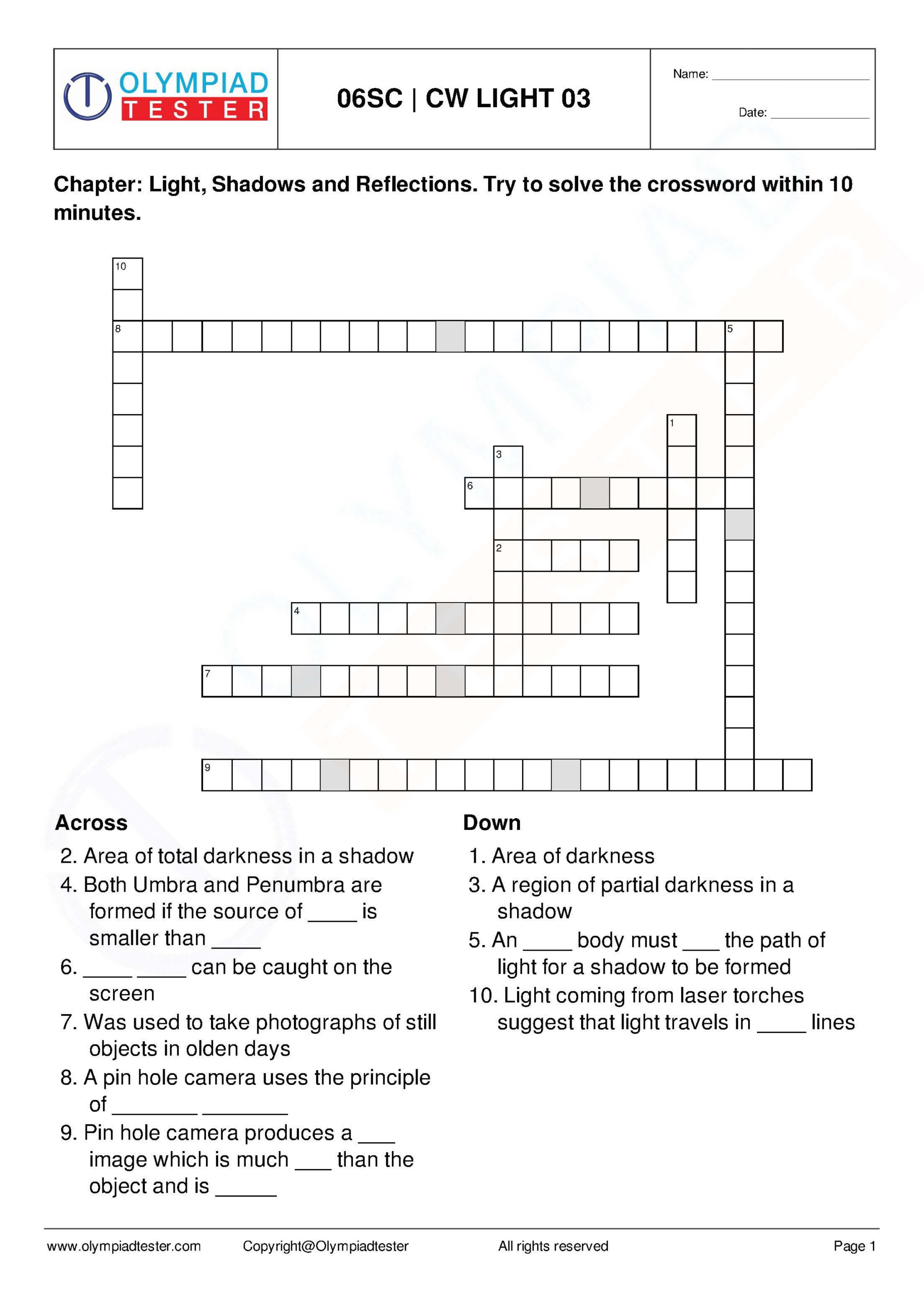
Maybe you’re worried you don’t have enough time to sift through endless downloads or that the materials won’t match your specific syllabus. Let that worry go. You don’t need to be a science expert or spend hours planning. A single well-made worksheet can do the heavy lifting for you—turning a confusing concept into a clear, hands-on moment. The resources you’ve seen today are designed to meet students where they are, with no fluff and no overwhelm. Trust that small, consistent practice beats cramming every time.
 Download
So here’s your next move: take the best science worksheets class 8 you found here and print just one for tonight. See how your child responds to that first challenge. If it clicks, bookmark this page and come back for more. If a friend’s kid is struggling with the same topics, send them the link—great resources are meant to be shared, not hoarded. Your job isn’t to be perfect; it’s to keep showing up with the right spark. That spark starts with a single page. Go ahead—make it count.
 Download